


Pakistan’s fuel relief scheme has provided subsidised petrol to more than 9.5 million people, but millions of households remain excluded as rising prices put pressure on the country’s cost of living.
Shaza Fatima Khawaja, the federal minister for information technology and telecommunications, said the programme was introduced in September to help lower-income citizens cope with fuel increases linked to the war on Iran.
The scheme reduces the price of petrol by 100 rupees per litre for motorcycle, rickshaw and small-car owners. Applicants send their national identity number, vehicle registration and province by text message to 9771, then receive a token before each visit to a petrol station.
Motorcycle and three-wheeler users can receive 500 rupees’ relief a week, with a maximum of four tokens a month. Owners of cars with engines of up to 800cc can claim 1,000 rupees every ten days, capped at three tokens a month.
The government made registration free after complaints and removed a five-litre minimum purchase requirement. Vehicle users no longer need to own the vehicle themselves, provided they can give the exact registration date recorded on its documents.
Khawaja said the ownership rule for two- and three-wheelers was dropped after the government considered how the scheme worked in practice. “Even in my own house, there’s a bike registered in our name that our cook uses for daily errands,” she said.
An earlier cash-transfer initiative reached slightly more than one million motorcycle owners, according to the minister, partly because payments required bank accounts that many riders did not have.
Pakistan fuel relief scheme faces questions over reach
The latest programme has been welcomed by some low-income users, although its value is limited for people who rely heavily on their vehicles for work.
“There’s a benefit; it’s not like there’s nothing,” said Shakeel Ahmed, a 45-year-old electrician in Islamabad. “The relief is decent for people who use it normally, for local trips. But for people like us, who put in 1,000 to 1,500 rupees [$3.60-$5.40] of petrol a day, it’s not enough.”
Economist Safiya Aftab said the scheme had reached its intended audience, particularly people using two-wheelers and small cars. She warned, however, that the government’s petroleum levy was adding to inflation.
The levy stands at 114 rupees per litre and is bringing in more than 100 billion rupees a month, Aftab said. It was initially intended as an environmental tax to discourage petrol use but had become an important source of government revenue.
The government has approved 75 billion rupees for the programme’s first three months, through November. Its monthly cost was estimated at between 25 billion and 30 billion rupees when the scheme began, but had risen to 35 billion to 40 billion rupees by late September.
Petroleum Minister Ali Pervaiz Malik has said the subsidy could continue for up to 10 months, or until the war ends if necessary. Pakistan is also operating under a 7 billion dollar International Monetary Fund programme, with an IMF team in Islamabad for talks this week.
Officials familiar with those discussions said the IMF wanted the relief limited to three months and delivered through the Benazir Income Support Programme, Pakistan’s main cash-transfer system. Khawaja said the fund had insisted from the start that assistance should be targeted rather than universal.
Petrol prices rise as some users receive no support
Diesel vehicles, public transport users and cars with engines larger than 800cc are not covered by the scheme. Critics say this risks leaving some of the poorest households without help, particularly those who walk to work or depend on buses and other diesel-powered transport.
More than 8.1 million tokens had been issued to two- and three-wheeler users by late September, compared with fewer than 380,000 for cars. A November 2024 Gallup Pakistan survey found that 79 per cent of respondents in rural and urban areas used public transport such as buses or wagons.
Khaqan Najeeb, a former adviser at Pakistan’s Ministry of Finance, said the maximum monthly saving amounted to 2,000 rupees for a motorcycle user and 3,000 rupees for an eligible car owner.
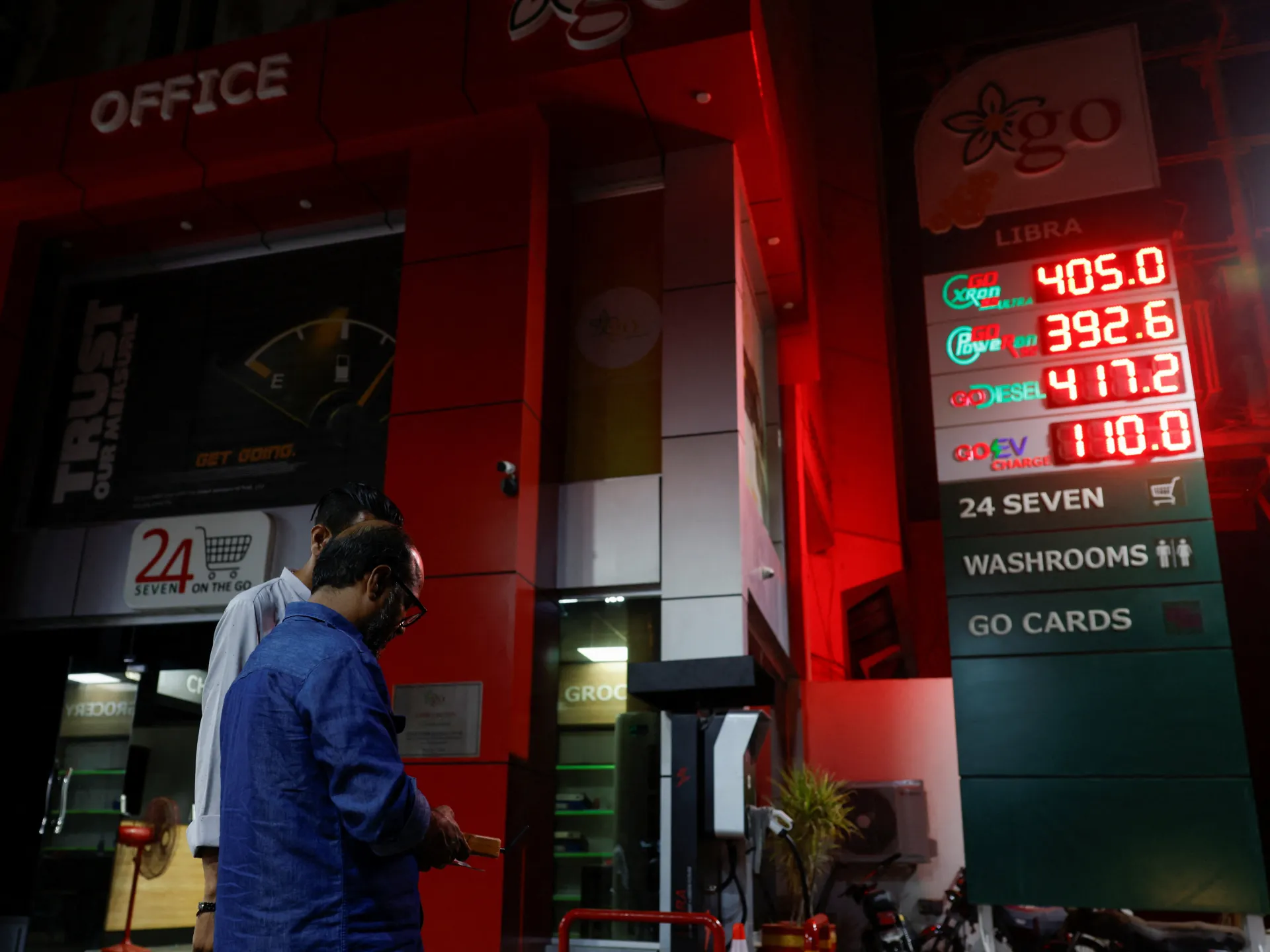
He described the payment as useful household assistance, but said it did not compensate for the wider rise in living costs. Petrol has increased from 266 rupees a litre before the war to nearly 395 rupees, despite a partial reduction in April, while inflation rose to 10.3 per cent in September from 7 per cent in February.
Sajid Amin Javed, a senior economist at the Sustainable Development Policy Institute in Islamabad, called the relief minimal but said the government’s room for manoeuvre was restricted by the IMF programme.
He argued that reducing the petroleum development levy would provide wider relief than a capped subsidy, saying the levy was supporting government revenues at a cost to inflation, economic growth and household welfare.
Najeeb said the scheme should not become a permanent part of Pakistan’s energy policy, but should instead be used to lessen the impact of sudden increases in oil prices.
