


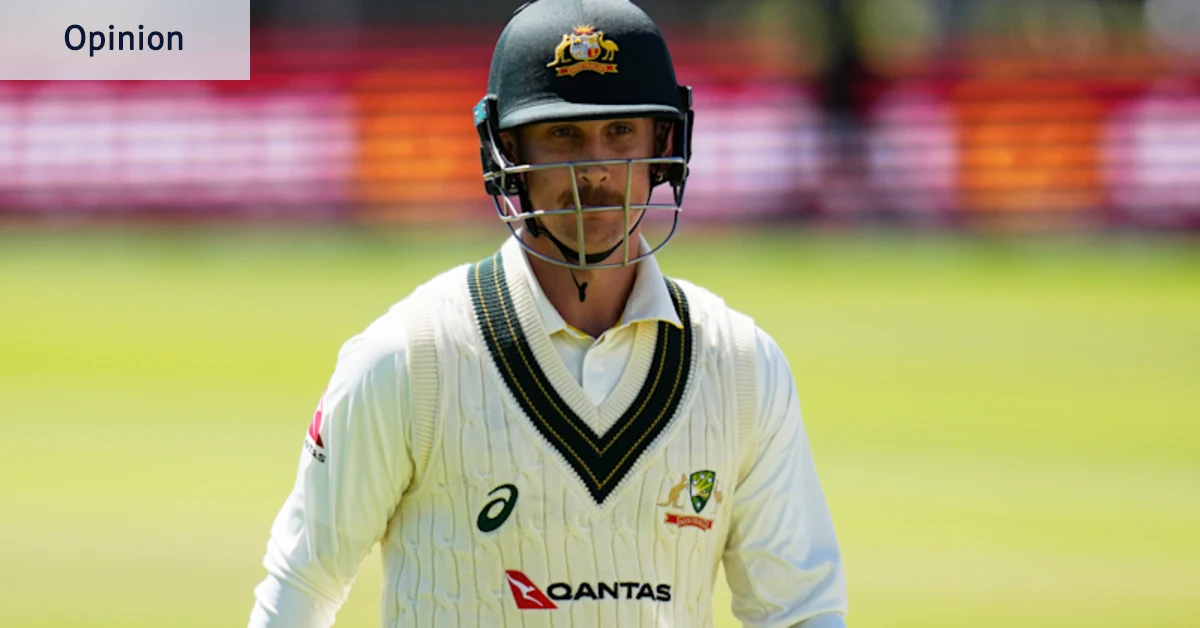
Australia’s Sheffield Shield competition has been undermined by national selection decisions, with Nic Maddinson’s elevation to the Test side despite limited recent first-class cricket raising fresh questions about the pathway into the team.
The issue has come into sharp focus after Australia’s innings defeat by South Africa in Gqeberha, a result that followed their victory in Durban and left Pat Cummins’s side with serious concerns over both selection and batting depth.
Cummins said the defeat could “kick the side into gear” and suggested the earlier win may have concealed “some hefty cracks”. Australia had won the toss, chosen to field and appeared to have enjoyed favourable conditions, yet South Africa secured a decisive victory in a match lasting little more than three days.
The captain’s bowlers were unable to compensate for the absence of Nathan Lyon, whose 573 Test wickets were left out of a specialist attack. In his place, Australia relied on part-time spin from Matt Renshaw, Nic Maddinson and Marnus Labuschagne, while Beau Webster kept the scoring under control without making a breakthrough.
South Africa’s Temba Bavuma, batting alongside the lower order, prevented his team from being dismissed for fewer than 200. The home side’s bowlers then completed the job as Australia’s batsmen failed to survive conditions in which they had been expected to save the match.
Sheffield Shield form overlooked
The batting order remains unsettled. Steve Smith is expected to return to No.4 after the unusual circumstances that saw him bat at No.7 in the second innings, following the use of a nightwatchman and a neck problem.
Travis Head made an aggressive contribution but was dismissed once again by a delivery moving into him, dragging the ball on. Labuschagne also failed to produce the runs required, despite Cummins saying he was “hitting the ball well”.
For a batsman, however, the decisive measure remains the number of runs scored. Labuschagne’s prolonged lack of substantial output has intensified debate over whether his place should be retained.
Maddinson’s selection has been more difficult to reconcile with the established first-class pathway. He did not play Sheffield Shield cricket last season and made only limited appearances the previous year, when his form was not convincing. His return to competitive cricket had also followed serious health concerns.
He scored four runs across two innings in the second Test against South Africa. His selection, ahead of players competing regularly in the Shield, has sent an awkward message to those seeking Test recognition through the domestic first-class competition.
The decision is made more striking by the suggestion that Mitchell Marsh had been considered for the first Test despite having retired from first-class cricket. Maddinson at least remained on a playing roster, but neither development strengthens the status of the Shield as the principal route to Test selection.
Concerns over Australia’s Test structure
Australia are ranked the world’s leading Test team largely because of their bowling, rather than the consistency of their batting. The current squad contains several players suited to the middle order, but still requires reliable openers and a No.3 capable of setting up an innings.
The result has been a selection structure in which specialist roles appear to have been fitted around available names rather than established through sustained domestic performance. The move from limited-overs cricket into opening a Test against a strong attack has further highlighted the uncertainty.
Questions about the value placed on the Sheffield Shield have also been linked to earlier proposals to reduce the competition to a single round because of its cost. Such an approach would leave Test selection increasingly dependent on 50-over, Twenty20 and club cricket, weakening the first-class foundation on which the national side has traditionally been built.
The irony is that the Shield season has begun strongly, with young players and established cricketers making runs, taking wickets and producing close results. The performances offer selectors a ready pool of evidence, but Australia’s latest choices suggest that evidence is not being given sufficient weight.
