


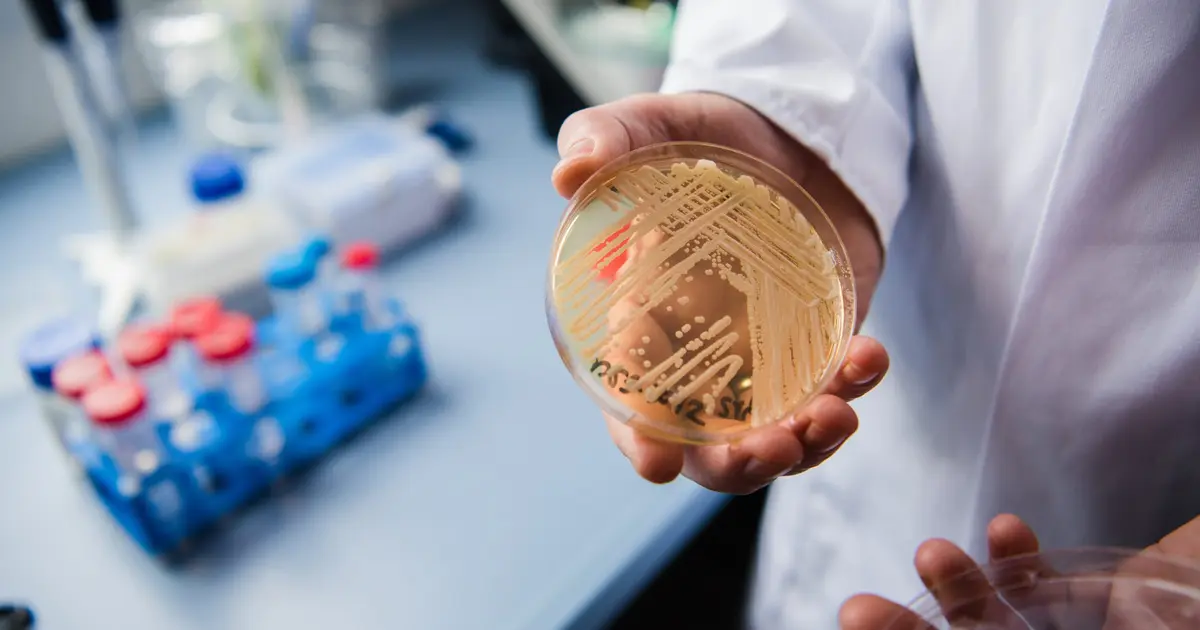
Scientists have identified a previously unknown way in which the potentially deadly fungus Candida auris can survive antifungal treatment, raising hopes of developing more effective drugs against infections that have proved difficult to control.
Researchers from the University of Exeter and City St George’s, University of London, found that the fungus can make multiple copies of its entire genome when exposed to treatment. The extra genetic material may give it more opportunities to develop mutations that allow some cells to withstand drugs.
The findings, published in Nature Communications on 15 October, help explain why Candida auris can sometimes survive medicines even when standard laboratory tests suggest that the fungus should be susceptible to them.
How Candida auris evades antifungal drugs
The discovery was made while researchers were investigating cases in which antifungal treatment appeared not to be working. Plates containing fungal cells were accidentally left incubating for longer than planned, and the team later found that a small number of cells had continued to grow.
Further testing showed that the surviving cells had developed several copies of their genome. The researchers identified both slower-growing and faster-growing populations, suggesting that the fungus can use genetic variation as a form of “bet-hedging” when faced with drug pressure.
The rapidly growing cells carried mutations in CRZ1, a gene involved in maintaining the integrity of the fungal cell wall. The researchers said the findings indicated that Candida auris could adapt through mechanisms that are not detected by conventional tests for resistance.
Dr Hugh Gifford, a clinical lecturer at Exeter’s MRC Centre for Medical Mycology and one of the study authors, said: “Candida auris is rare in the general population, but it’s a deadly threat to patients in intensive care units.”
He said the fungus could remain on patients’ skin and medical equipment, spread between people and prove “incredibly hard to eradicate”. If an infection reaches the bloodstream of a vulnerable patient, he said, the death rate was 45 per cent.
Outbreaks have also caused serious disruption in hospitals. One intensive care unit in the UK reportedly had to close for complete refurbishment, while the cost of controlling another outbreak was estimated at £1 million.
First identified in 2008, Candida auris has since caused outbreaks in more than 60 countries. The World Health Organisation classifies it as a critical-priority fungal pathogen because of its ability to spread in healthcare settings and its resistance to several classes of antifungal medicine.
The fungus poses its greatest threat to patients who are already seriously ill or have weakened immune systems. It is uncommon in the general population, but can cause severe bloodstream infections and is particularly challenging to remove from hospital environments.
Dr Sarah Murphy, a former postdoctoral researcher at City St George’s and a co-author of the study, said the team had been surprised to find a small population of cells growing after exposure to very high concentrations of antifungal drugs.
“Our discovery means we need to now look at new ways of treating people and eradicating this deadly fungus from hospitals,” she said.
Professor Tihana Bicanic, the study’s senior author, said the results suggested that fungal infections could be more complicated than previously understood, with multiple populations of cells potentially present during an infection.
Researchers are now examining whether combining antifungal medicines could help prevent the fungus from adapting. The work is being taken forward through the Exeter-led Fungi-CARE programme, with the longer-term aim of improving treatment and reducing deaths from drug-resistant fungal infections.
