


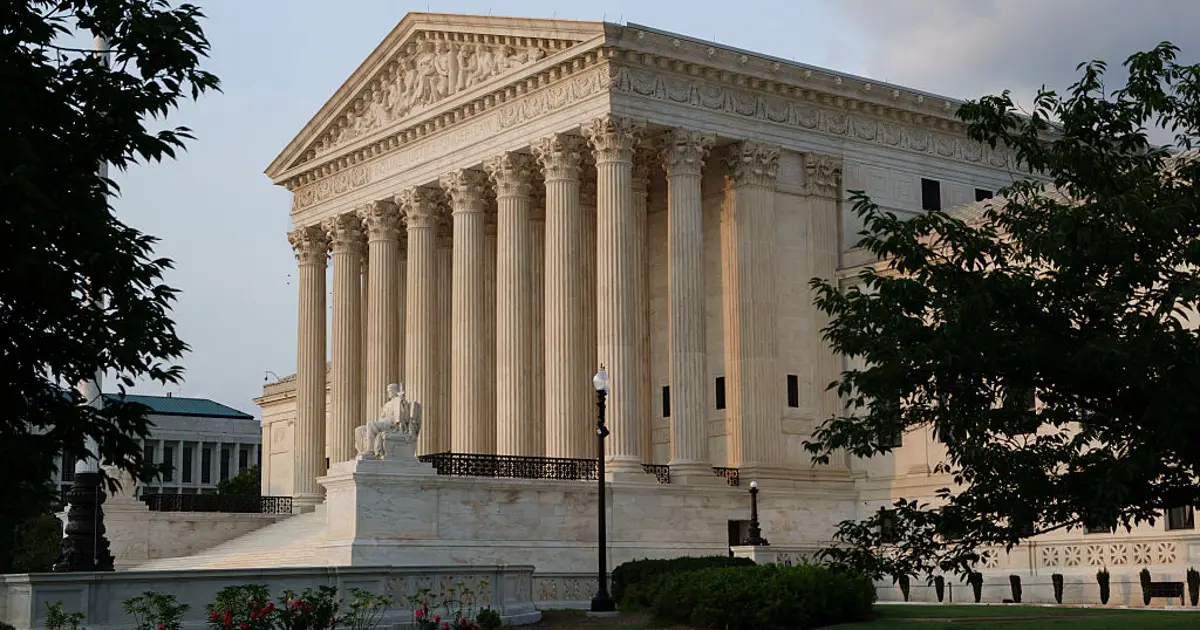
The US Supreme Court has declined to intervene in a surrogacy dispute involving a baby born in Texas, leaving a California couple recognised as the child’s legal parents.
Justice Elena Kagan rejected an emergency application from McKenna West on Tuesday, 22 September. The order gave no explanation for the decision and leaves in place rulings in California and Texas that denied West’s request for conservatorship.
West, an Alaskan nurse, had sought the right to participate in decisions about the boy’s medical treatment. She gave birth in Dallas on 12 August after refusing the couple’s request to terminate the pregnancy following a diagnosis of hypoplastic left heart syndrome, a life-threatening condition in which the left side of the heart is severely underdeveloped.
Surrogacy dispute centres on baby’s medical care
The child is referred to as Gabriel by West and as Rumi by his intended parents, Omar Ahmed and Nausheen Gilkar. The couple, who live in Los Angeles, hired West as a surrogate after struggling to have a child.
West has argued that Ahmed and Gilkar cannot be trusted to provide life-saving treatment because they had asked her to end the pregnancy. She sought custody on the grounds that she should have a say in decisions affecting the child’s care.
The couple has denied that it intends to withhold necessary treatment. Its lawyers told courts that Ahmed and Gilkar are committed to caring for the boy and argued that West’s involvement would create uncertainty over who had authority to make medical decisions.
Rumi underwent surgery shortly after his birth. The Centers for Disease Control and Prevention says children with hypoplastic left heart syndrome commonly require a series of operations, including an initial procedure within the first two weeks of life, followed by further surgery at around four to six months and between 18 months and three years.
According to court filings, a doctor at Children’s Hospital in Dallas told a court that the couple had agreed to the recommended treatment. The doctor also recommended that the Texas courts allow the child to return to Los Angeles for care.
The Texas Supreme Court has separately declined to prevent Ahmed and Gilkar from taking the boy back to California, while a Texas court order enforcing the California parentage judgment remains in force. West was dismissed from the Texas case with prejudice, meaning she cannot bring the same claim again in that proceeding.
The US Supreme Court’s decision brings the latest stage of the legal fight to an end for now, with custody remaining with the California couple and West unable to make medical decisions for the child.
