


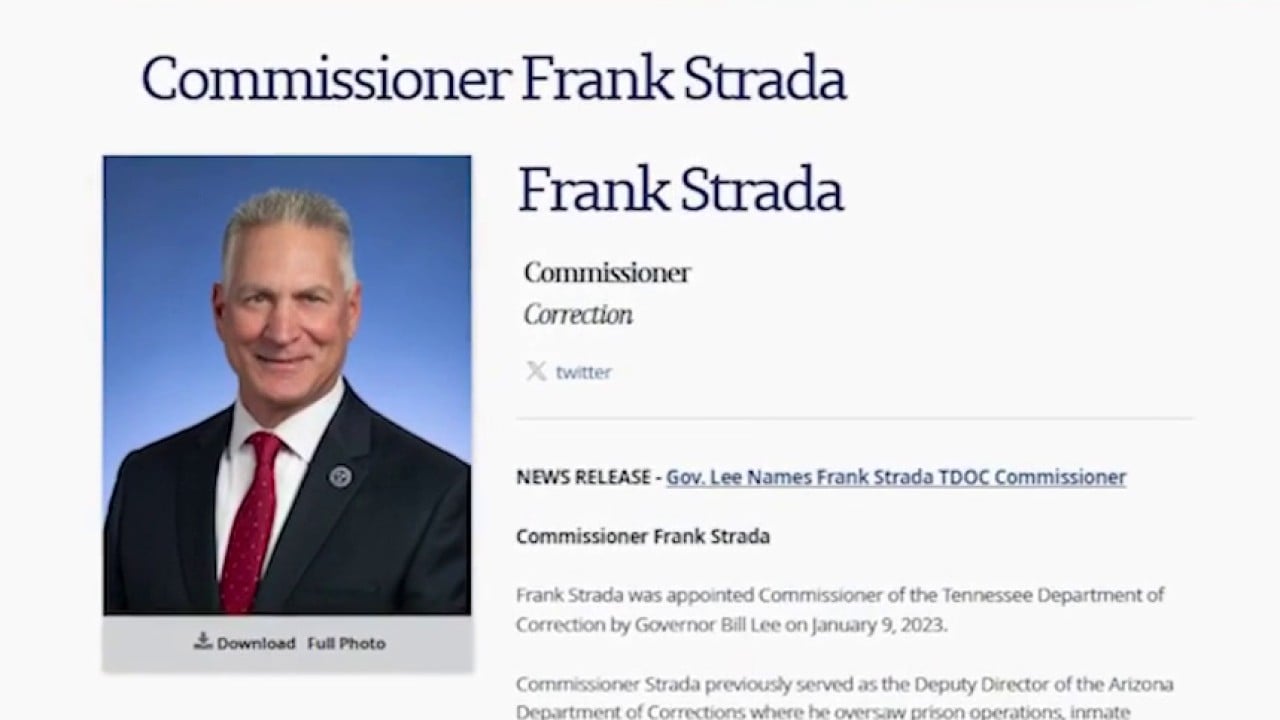
A failed lethal injection in Tennessee has renewed scrutiny of Arizona’s troubled execution record, because the state’s corrections commissioner, Frank Strada, previously oversaw prison operations in Arizona.
Christa Pike remained unconscious and on a ventilator after surviving two doses of pentobarbital during an execution attempt at Riverbend Maximum Security Institution in Nashville on Wednesday, September 30.
Her lawyer, Randy Spivey, said the Tennessee Department of Correction was not capable of carrying out an execution “consistent with basic human dignity”. Tennessee officials have said the department followed the state’s approved protocol, which does not allow additional procedures once the authorised steps have been completed.
Governor Bill Lee has halted executions in Tennessee until the end of 2026 while an investigation examines what went wrong. Pike has been taken to an off-site medical facility, according to the department.
Arizona’s lethal injection record
Strada was deputy director of the Arizona Department of Corrections before becoming Tennessee’s corrections commissioner in January 2023. In Arizona, he oversaw prison operations during a period when the state faced intense criticism over its execution procedures.
During the execution of Clarence Dixon in May 2022, prison staff spent about 30 minutes trying to establish an intravenous line before accessing a vein in his groin. A month later, medical personnel struggled to locate a vein in Frank Atwood’s right arm, with witnesses saying Atwood suggested using his hand instead.
The difficulties contributed to Governor Katie Hobbs ordering an independent review of Arizona’s death penalty procedures in 2023. She appointed retired federal magistrate Judge David Duncan, who later said he was dismissed before completing his work after concluding that lethal injection was not a viable method of execution.
“Lethal injection is not a workable method of execution,” Duncan said. He also told the governor that, if Arizona retained the death penalty, the state should consider a firing squad, which he said had the lowest rate of failed executions.
Duncan said his concerns extended beyond inserting intravenous lines, including the availability of medical personnel and execution drugs. Arizona resumed executions in 2025 despite the earlier pause.
