


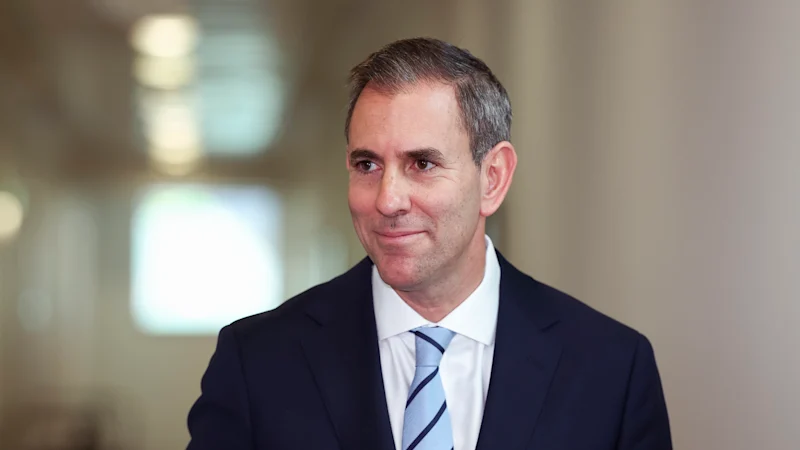
Australian Treasurer Jim Chalmers will meet more than 30 Japanese chief executives, investors and business leaders in Tokyo as the government seeks to present Australia as a secure destination for investment during a period of global economic uncertainty.
During the two-day visit, Mr Chalmers will promote Australia’s renewable energy and critical minerals industries, its artificial intelligence and data-centre capabilities, and the country’s $4.8 trillion superannuation system as a substantial source of investment capital.
He will meet Kenichi Hori, the head of Mitsui & Co, and Juro Baba, executive vice-president of Mitsubishi Corporation, while also holding discussions with other major Japanese firms.
“If investors want to make the most of the defining decade ahead, nowhere offers more opportunities than Australia,” Mr Chalmers said.
“We’re making Australia an indispensable part of the transformation underway in the global economy, and we’re telling the world’s investors why they need a piece of the action.”
Chalmers to promote energy and investment opportunities
The Treasurer will argue that Australia can become a major supplier of green energy and critical minerals, with domestic renewable electricity eventually able to compete with established energy hubs including the Middle East and Russia.
His pitch comes as relations between the two countries face uncertainty over Australia’s proposed domestic gas reservation policy. Japan obtains about 40 per cent of its liquefied natural gas from Australia, supporting a significant share of its energy generation.
The original plan prompted appeals from officials in Japan, South Korea and Malaysia, all major buyers of Australian LNG, who sought greater certainty over protections for existing contracts.
Under a revised scheme due to begin in January 2028, LNG exporters will be required to reserve up to 20 per cent of their volumes for Australian customers. The policy is intended to create a 10 per cent domestic oversupply each year and reduce fuel costs, although the government has since softened the proposal to ensure the oversupply remains “modest”.
Mr Chalmers will also highlight the stability of Australia’s superannuation sector and the country’s development of artificial intelligence and data centres.
“This is all about boosting investment in Australia, bolstering supply chains and economic resilience, and strengthening our relationships in Asia,” he said.
“As a reliable, responsible middle power with strong economic foundations and huge advantages in areas like energy, AI and critical minerals, Australia is an attractive investment destination.”
On Monday, the Treasurer will chair two roundtables. One will bring together Japanese and Australian investors and asset managers, while the other will focus on residential development and construction methods that could help increase Australia’s housing supply.
The Tokyo visit is the first leg of a three-country Asian tour for Mr Chalmers. He is due to travel to Bangkok for meetings with G20 finance ministers during the annual meetings of the International Monetary Fund and World Bank, before attending discussions with Asia-Pacific Economic Cooperation counterparts in Hong Kong.
The investment campaign follows Prime Minister Anthony Albanese’s recent declaration at the United Nations that the post-1945 international order was “no longer fit for purpose”. His comments came amid calls for middle powers to forge stronger partnerships while defending the rules-based international system.
