


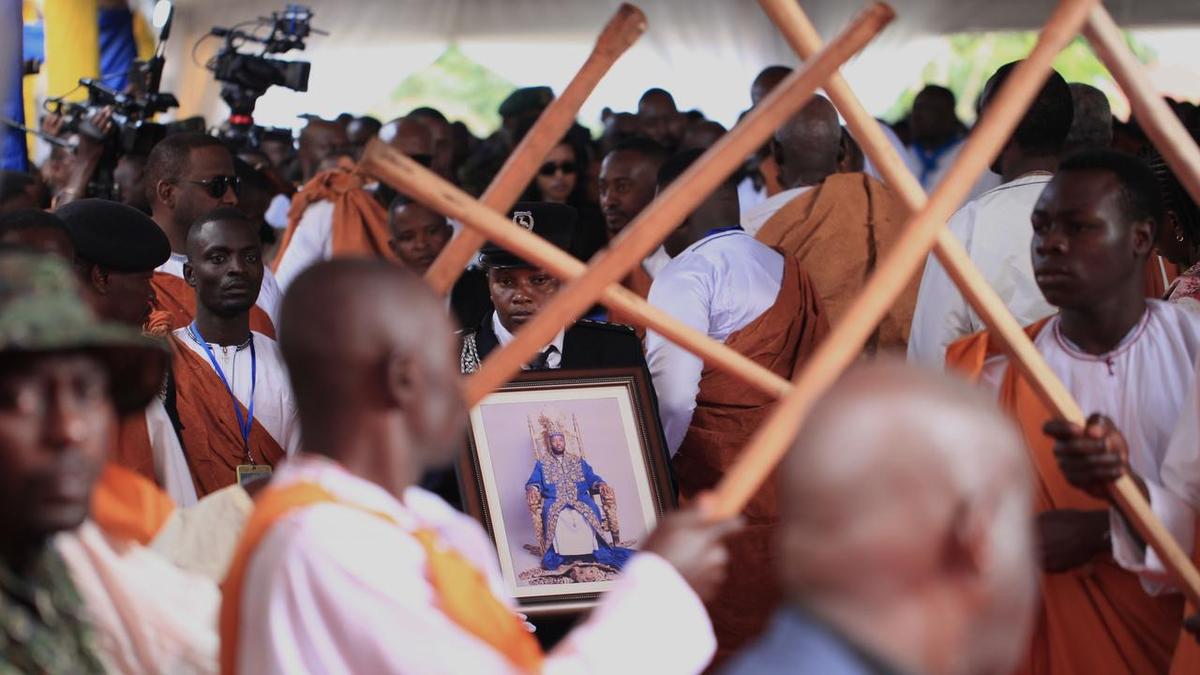
Uganda’s King Oyo Nyimba has been buried amid a bitter dispute over who should succeed him as monarch of the Tooro Kingdom.
Oyo, who became king at the age of three in 1995, died last month from cancer aged 34. His funeral service was held at an Anglican cathedral in Fort Portal, near the Congo border, before he was buried beside his ancestors on Saturday.
The ceremony brought a nine-day period of mourning to a close, but tensions over the succession have continued to divide the royal family and Tooro’s ruling Babiito clan.
King Oyo was unmarried and elders from the clan say he never named an heir. Other figures in the kingdom maintain that he had a son born out of wedlock, although the child has not been publicly identified.
Unverified claims on social media have named at least two possible heirs alleged to be Oyo’s children.
Dispute over King Oyo’s successor
On Wednesday, a committee of Tooro elders announced that it had selected a prince who works as a journalist to succeed the late king. The decision was welcomed by traditionalists who favour an adult monarch, but was criticised by Oyo’s closest relatives.
His sister, Ruth Komuntale, said the announcement was intended to “bring division and turmoil”.
Queen Mother Best Kemigisa said the succession dispute had interfered with the family’s ability to grieve.
“I also appeal to those fighting over the throne: please, there will be time for all of that,” she said in a statement. “Let us grieve and bury my son King Oyo.”
Oyo’s family has said he left a will which was disregarded by Tooro elders, raising the possibility that the succession dispute could be taken to court.
He became a global curiosity after ascending the throne as a child and was once regarded as the world’s youngest king. At his coronation, he took part in traditional rituals, including throwing nine coffee beans into his father’s tomb during a coming-of-age ceremony.
Regents governed the kingdom on his behalf until he turned 18. He was later introduced to international figures at national events, including former South African president Nelson Mandela.
Timothy Kalyegira, an analyst from Tooro, described Oyo’s death as one “that one never heals from” in a eulogy posted on X.
Uganda’s traditional kingdoms were abolished after independence by a republican president seeking to unify the country, but were restored in 1993. They have no political authority and are barred by law from partisan politics, although their monarchs remain guardians of tribal culture.
