


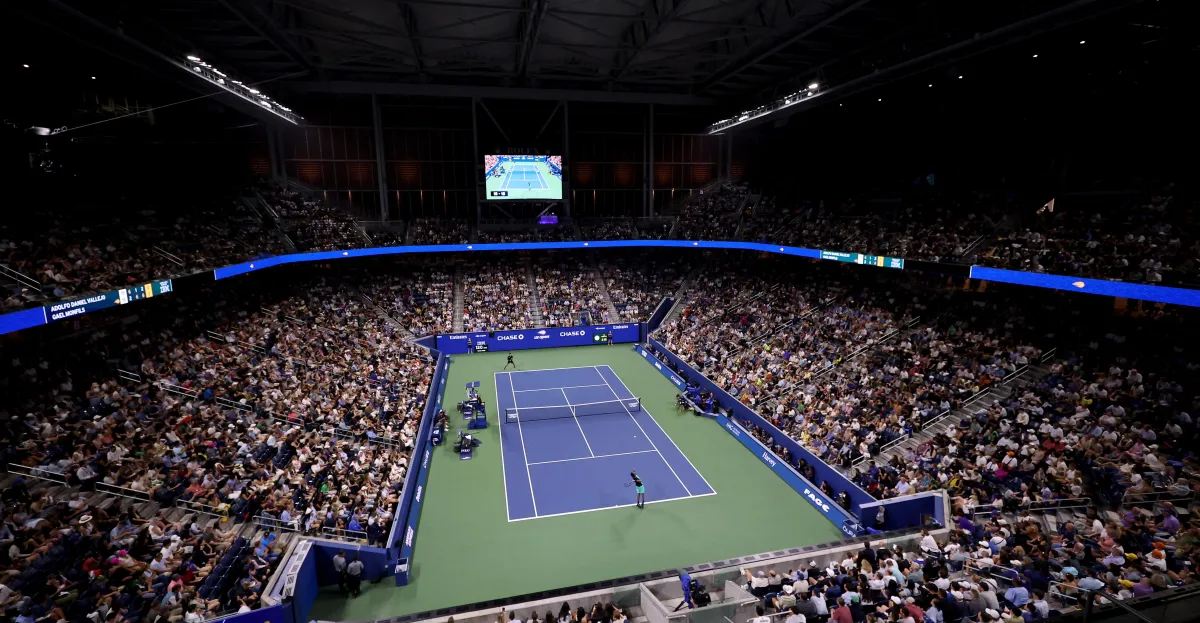
US Open influencers have come under scrutiny after a group of content creators disrupted Naomi Osaka’s match against Anastasia Zakharova, prompting the umpire to repeatedly call for silence from a luxury suite.
Some spectators were reportedly using ring lights while Osaka and Zakharova played. Elsewhere at the USTA Billie Jean King National Tennis Center, creators were seen asking staff to take full-flash photographs during matches.
The incidents have reignited questions about the tournament’s growing reliance on influencers to promote the event, and whether brands are doing enough to ensure that their guests respect the sport and other spectators.
Jeanmarie Daly, the United States Tennis Association’s media operations director, said last month that the number of approved content creators was “almost doubling”. There were close to 100 influencers at this year’s tournament, compared with 54 the previous year.
However, USTA spokesman Brendan McIntyre told ABC News that the creators involved in the Osaka-Zakharova disruption were not credentialed by the organisation.
Mr McIntyre also told The Athletic that lifestyle influencers Meg Radice and Audrey Jongens had not been issued official media credentials. Their access was revoked after they posted images of their badges on Instagram.
He said the pair had been “improperly submitted for credentials on a staff list provided by a food vendor”.
US Open tightens guidance on photography
The tournament’s spectator policy has also evolved. Since a rule change in 2024, fans have been allowed to leave their seats at any point during a match, rather than waiting for the changeovers when players switch sides of the court.
The US Open has also introduced designated areas near the courts where spectators can move around. Tournament director Stacey Allaster described the change as “an important addition to the fan experience at the US Open”.
But the latest incidents appear to have prompted additional guidance. In the days after videos of the influencers circulated online, the USTA installed signs outside stadiums asking spectators to “please refrain from using flash photography or other lighting”.
Influencers are invited to major sporting and entertainment events because their posts can put brands and organisers in front of audiences who might not otherwise be following them. US creator advertising expenditure reached $37 billion in 2025 and is expected to rise to $44 billion by the end of this year.
The commercial value of that exposure has made content creators an increasingly important part of advertising. But the scenes at the US Open have highlighted the risks when the pursuit of photographs and video content interferes with the event being promoted.
Some brands have reportedly issued creators with reminders about tennis etiquette before the tournament. The expectation is that influencers should be able to produce material without distracting players or preventing other spectators from watching in peace.
A separate dispute involving Callaway Golf last month offered another example of the risks of giving creator-led campaigns too much latitude.
An advert made by Good Good, a YouTube channel and sports apparel company, showed co-founder Garrett Clark pushing professional golfer Alexis Miestowski to the ground as she reached for a Callaway-branded driver. The spoof, based on Curry Barker’s Obsession, was criticised as making light of violence against women.
Callaway removed the advert, apologised and ended its relationship with Good Good. Chief executive Chip Brewer said: “Mistakes were made, and we are taking the matter very seriously.”
Mr Brewer also acknowledged that Callaway had approved the video before publication, while saying that its content did not represent the company’s values.
The episode has placed renewed attention on the responsibilities of companies that work with influencers. Creators may have strong control over their own style and audiences, but brands remain responsible for checking that the material they endorse is suitable and that their representatives understand the boundaries of the venues they attend.
