


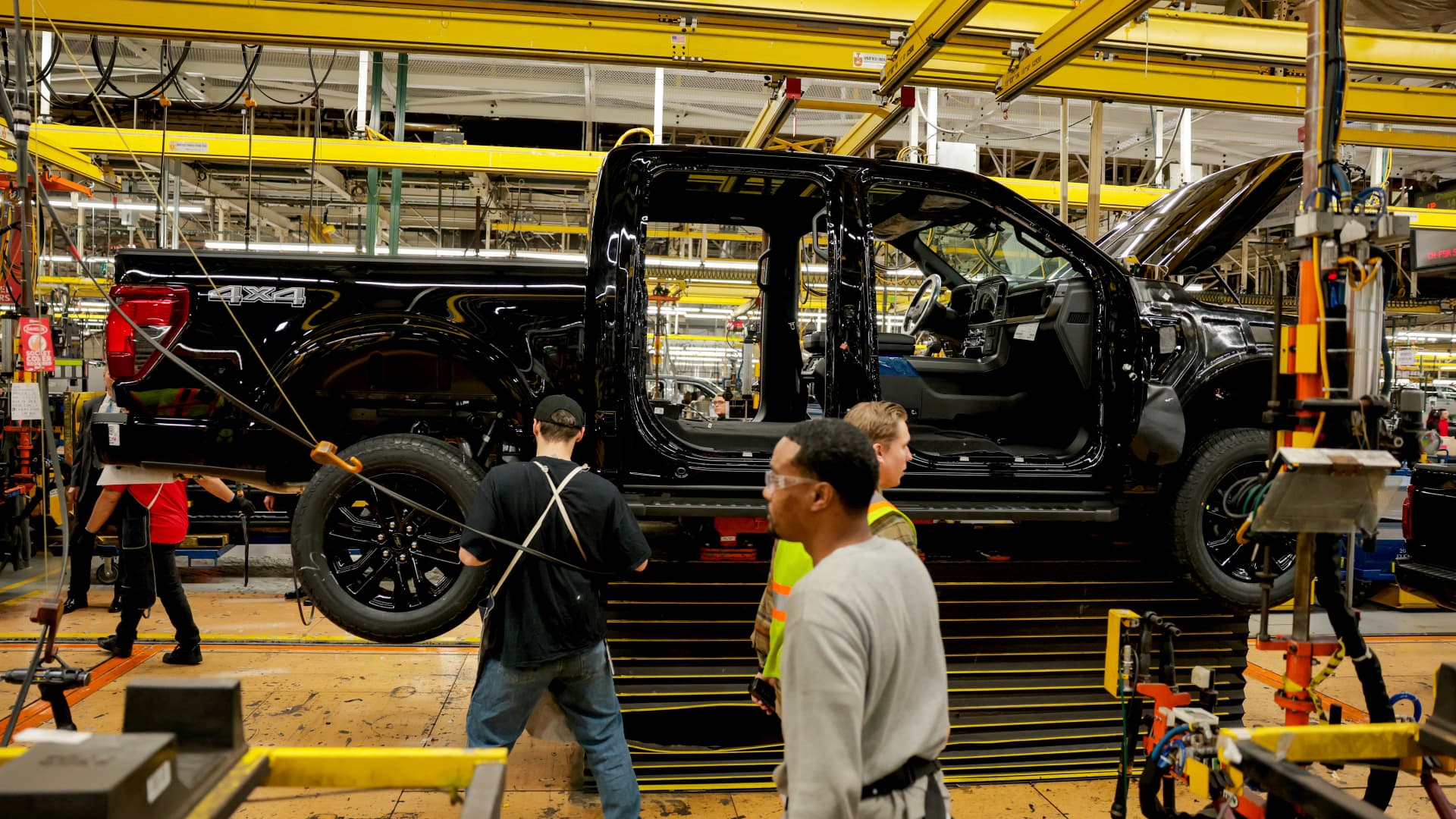
Ford is ramping up production of its F-Series pick-up trucks after fires at key aluminium supplier Novelis caused severe shortages, with more F-150s expected to reach US dealerships over the next three months.
Rob Kaffl, Ford’s head of US sales, said output of the F-Series — including the F-150 and larger Super Duty models — had risen each month this year and was now broadly in line with, or slightly above, historical levels.
“Dealers will start seeing in the next 30, 60, 90 days that ramp-up in production,” Mr Kaffl said. “We have a healthy chain of in-transit and in-system.”
Ford produced 57,504 F-150s in August, its highest monthly total for two years. The increase follows the restart of operations at Novelis’s Oswego plant in New York, which resumed hot-mill production in June after two fires disrupted supplies.
The production recovery comes despite another weak month for Ford sales. The carmaker reported an 8.3 per cent fall in US sales in August compared with the same month last year, its eighth consecutive year-on-year decline.
F-Series sales were down 1.2 per cent last month and have fallen 10.9 per cent in the first eight months of the year.
Ford targets higher F-Series stock levels
Ford dealers currently hold about 40 days’ supply of pick-up trucks, roughly half the level generally regarded by the industry as healthy. The company is aiming to raise that figure to between 50 and 60 days, below the historical norm of about 75 to 90 days.
“We’re being very intentional to make sure the production is meeting the demand,” Mr Kaffl said.
The manufacturer has increased production beyond last year’s levels to make up for trucks that could not be built during the Novelis disruption. Ford has also said it plans to add more than 50,000 F-150 and Super Duty trucks to 2026 output as it rebuilds supply.
The fires at Novelis’s New York facility are expected to cost Ford about $1.5 billion this year. The supplier has been working with customers and using production from other sites to restore aluminium supplies while the Oswego plant returns to full capacity.
Ford said its sales comparisons were also affected by the discontinuation of two vehicles earlier this year and a planned reduction in deliveries to daily rental fleets. Labour Day, traditionally an important US sales weekend, fell in September this year rather than August, further complicating the comparison.
Ford estimated that total new-vehicle sales across the US industry fell by about 6 per cent in August, as demand continued to slow.
