


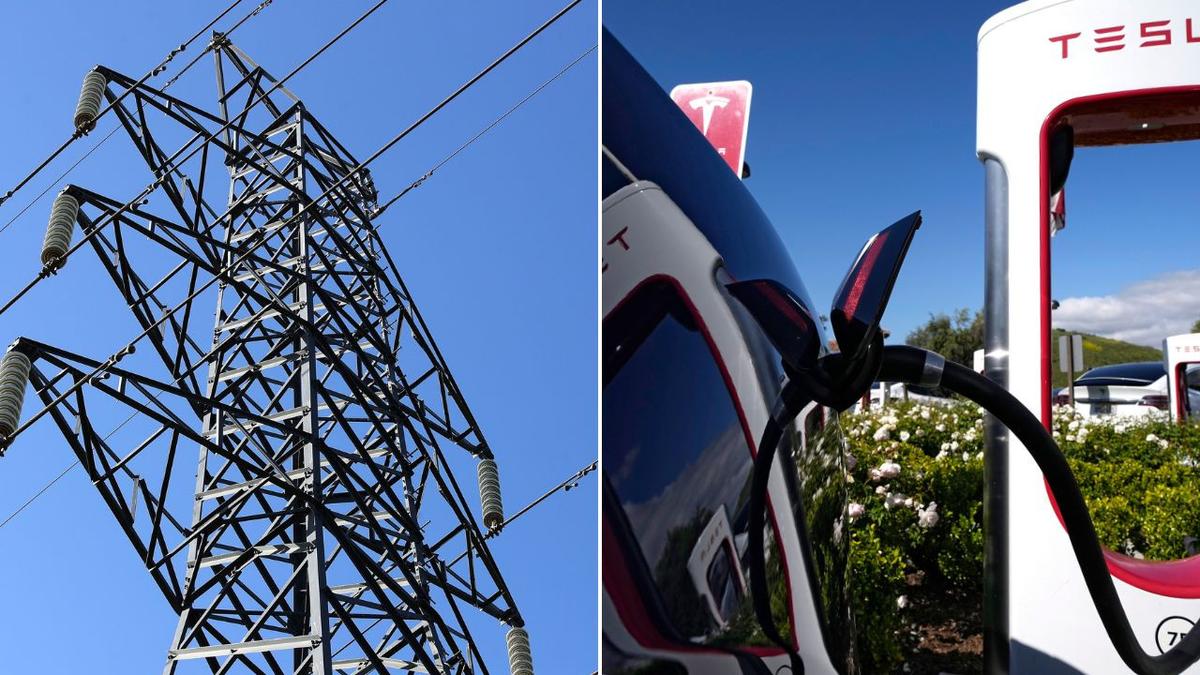
Australian households could pay about $1 more a year on their electricity bills under a plan to support the installation of thousands of new electric vehicle chargers.
The Australian Energy Market Commission has released a draft rule backing a $40 million Federal Government programme to install about 14,000 chargers in areas where infrastructure is limited.
The Commonwealth would fund roughly 30 per cent of the scheme, while electricity networks would be permitted to recover the remaining 70 per cent from consumers, regardless of whether they own an electric vehicle.
AEMC chair Anna Collyer said the commission believed the benefits of the programme would outweigh the cost to households.
“The Commonwealth’s program is a targeted measure to help close the gap between the rising EV uptake and EV charging infrastructure,” Ms Collyer said.
Chargers targeted at regional and urban areas
The rollout would focus on regional charging blackspots and densely populated urban areas where residents may not have access to off-street parking.
Private charging operators would be given the first opportunity to install chargers at selected sites. Electricity networks would act only as a “last resort” where private operators did not take up a site, although they would be required to provide chargers in regional blackspots.
The AEMC said the scheme was intended to improve access for renters and apartment residents while supporting the uptake of electric vehicles.
The draft rule would apply only to the Federal Government programme, which is scheduled to run until June 2029. It would not give electricity networks approval to install chargers wherever they choose.
A separate proposal from Energy Networks Australia is also being considered by the AEMC. It would allow electricity distributors to install, own and maintain kerbside electric vehicle chargers as an ongoing regulated service, with costs potentially recovered through regulated charges.
That proposal is separate from the current draft rule. The AEMC plans to publish a draft determination on it by May 2027.
Public submissions on the current draft rule close on November 5, with a final decision expected by the end of the year.
