


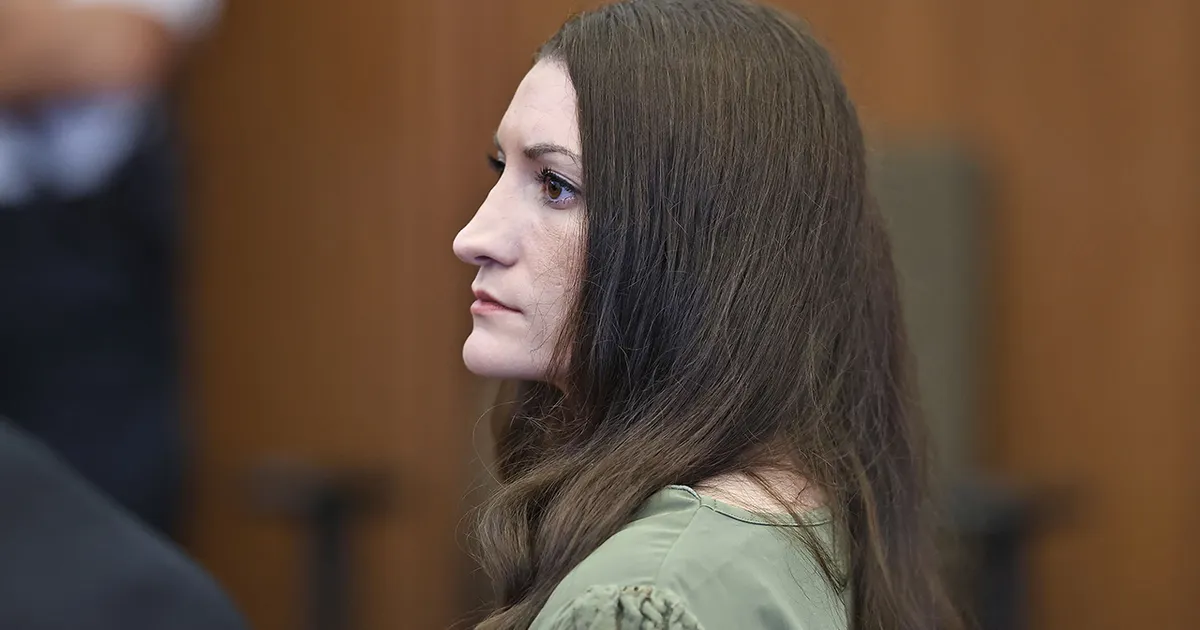
A mistrial is set to be declared in the Lindsay Clancy murder trial after jurors failed to reach a unanimous verdict on whether the Massachusetts mother was criminally responsible for the deaths of her three children.
Plymouth County Superior Court Judge William Sullivan said he intended to end the trial on Friday after the 12-member jury reported that it remained deadlocked. The defence was given an hour to make an emergency application seeking a stay.
The jury, comprising nine women and three men, had spent seven days deliberating after a five-week trial. It had twice told the judge it could not agree on a verdict.
Jury divided over reasonable doubt
The impasse became more pronounced on Thursday when the jury foreperson told the court that one juror was refusing to follow the judge’s instructions on reasonable doubt.
Clancy’s lawyer, Kevin Reddington, asked for that juror to be removed, arguing that the person was preventing the panel from reaching a decision. Judge Sullivan declined to dismiss the juror and instead questioned members of the panel about their ability to follow the law.
Earlier in the week, the judge had issued Massachusetts’ version of a so-called dynamite charge, formally known as the Tuey-Rodriguez instruction. It urged jurors to reconsider their positions and listen to one another while not abandoning sincerely held views.
The move failed to break the deadlock, leaving the trial heading towards a mistrial rather than a finding of guilt or acquittal.
What happens after the Lindsay Clancy mistrial?
A mistrial would not amount to an acquittal. The case would return to its pre-trial position, with Clancy still facing murder charges and being held at a psychiatric hospital while prosecutors decide how to proceed.
The Plymouth County district attorney’s office could seek a new trial before a fresh jury. That would require jury selection to begin again and the evidence to be presented in court for a second time.
Clancy was charged over the deaths of her daughter Cora, aged five, and her sons Dawson, aged three, and Callan, who was eight months old, at the family’s home in Duxbury in January 2023.
Prosecutors alleged that she deliberately strangled the children while her husband briefly left the house to collect dinner, arguing that she had planned the killings and understood that her actions were wrong.
Clancy’s lawyers did not dispute that she strangled the children but argued that she was suffering from postpartum psychosis, a severe condition which can involve hallucinations, delusions and profound disorientation.
The defence said she had been prescribed several medications in the weeks before the killings and was overwhelmed by intrusive thoughts she could not control. Clancy, a former labour and delivery nurse, then attempted to take her own life by jumping from a second-storey window.
More than 80 witnesses gave evidence during the trial, including Clancy’s former husband, psychiatrists and psychologists, as well as friends and relatives who testified for the defence.
