


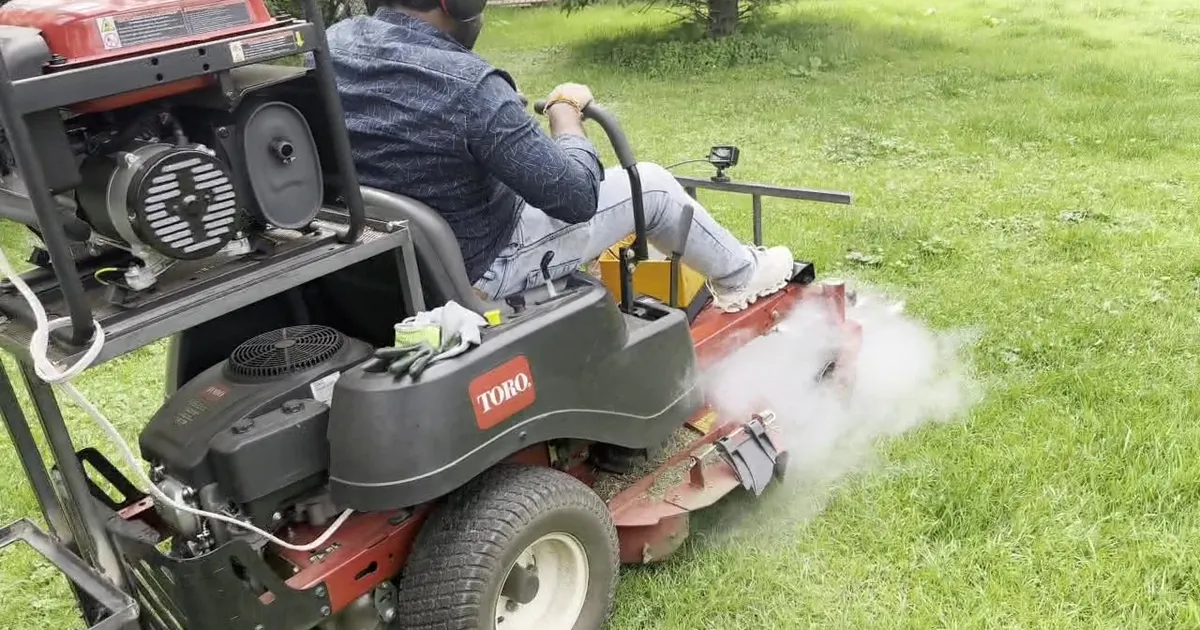
A Minnesota inventor has turned a lawn mower into an artificial intelligence-powered weed killer that uses targeted bursts of steam instead of chemical herbicides.
Mark Boysen, based in Edina, modified the machine so cameras and software can identify weeds among healthy grass before directing heat at the unwanted plants. The system uses only water and is designed to leave surrounding vegetation untouched.
AI weed killer targets plants with steam
Boysen said the machine can detect the difference between a weed and a lawn plant before delivering a precise burst of steam. He said the treated weeds typically die within about 20 minutes as the heat breaks down their cellular structure.
“We’re able to detect weeds with A.I., distinguish the difference between a weed and what’s not a weed, and we hit it with a burst of steam, and it kills — just 100% water,” he said.
Demonstrations carried out in Boysen’s garden showed repeated applications being used to kill weeds without spraying chemicals across the entire lawn. He said the process produces a smell similar to cooked spinach as the plants are heated.
The technology is being developed by Boysen’s company, NAWARE, which has produced a smaller version intended to be more practical for homeowners. The inventor has not yet released the full design of that model, saying it is not ready to be shown publicly.
One version of the machine is already being used at a winery in Arizona, while Boysen has also presented his sustainability work at the Minnesota State Fair.
The Minnesota Pollution Control Agency said in October 2025 that NAWARE had won its $10,000 Green and Sustainable Chemistry Prize as part of the Minnesota Cup. The agency described the device as a system that mounts on existing mowers, tractors or all-terrain vehicles and uses artificial intelligence to locate weeds before applying steam. ([pca.state.mn.us](https://www.pca.state.mn.us/news-and-stories/green-chemistry-prize-winner-naware-swaps-herbicides-for-steam-and-ai?utm_source=openai))
According to the agency, the treatment can allow immediate reseeding, unlike some chemical applications. NAWARE says its system has achieved weed-detection accuracy of between 85% and 90%, although that figure is a company claim rather than an independent assessment. ([naware.io](https://naware.io/))
Boysen, who spent 12 years working as a product coach for companies ranging from start-ups to Fortune 500 businesses, said he decided to develop the invention after realising he needed to follow the advice he had given to others.
“I was teaching companies and enterprises all the way up to Fortune Four, from startups to Fortune [500], and teaching them how to basically build products. And I was like, hey, maybe I got to listen to my own playbook here,” he said.
Neighbour Ryan Finnefrock said the chemical-free approach was particularly appealing because he has two young children.
“We know that steam is not going to hurt anything. So that’s incredible that he thought of that idea and has grown it,” Finnefrock said.
Boysen said interest in the product was already greater than NAWARE’s ability to supply it, with the next challenge being to develop the technology quickly enough for wider commercial use.
