


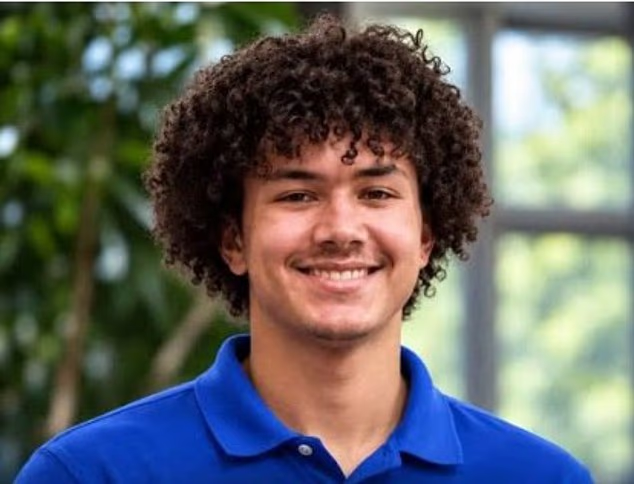
A Cornell University fraternity member accused of sexually assaulting a woman at a party was listed as a trained sober safety monitor for the event, despite later telling investigators he had been heavily drinking.
Jonathan Newell, 21, was among seven Chi Phi members designated to promote safer partying at the fraternity house in Ithaca, New York, on October 19, 2024. The monitors were expected to remain sober, wear identifiable clothing and respond to emergencies.
Newell is one of seven fraternity members accused in a civil lawsuit of sexually assaulting a woman during the party. The men deny the allegations and none has been criminally charged.
The woman, identified in the lawsuit as Jane Doe, alleges that she was plied with drugs and alcohol before being sexually assaulted during a seven-hour ordeal. She also alleges that Newell sent a Snapchat message inviting other fraternity members to join.
Newell denied the allegations during a campus police interview, telling investigators that his sexual activity with the woman was consensual. He said he could not remember sending the Snapchat message.
University records show that Newell was listed as one of the seven designated monitors on the night of the alleged assault. The paperwork described the role as that of a trained event monitor who would remain sober and be readily identifiable to other partygoers.
However, Newell told investigators that he arrived at the Chi Phi house at about midnight after drinking at other parties and was so intoxicated that he stumbled down the stairs. He estimated that he had consumed three beers, several shots, two mixed drinks and half a bottle of a strawberry tequila drink.
Records of his December 2024 interview do not establish whether Newell understood the responsibilities of a sober monitor or had agreed to take on the role before his name was included on the paperwork.
The safety measures had been introduced by Cornell two years earlier after a series of incidents, including claims by students that they had been drugged at fraternity parties. The university’s Greek Life rules banned hard liquor from fraternity and sorority houses and required alcohol-fuelled parties to end by 1am.
Monitors were also expected to take reasonable steps to prevent overcrowding and underage drinking, stop public urination and prevent people from leaving with open containers.
Newell was later expelled from Cornell following a Title IX investigation. He has also since been removed from Nova Southeastern University in Florida.
In the campus investigation, Chi Phi’s risk manager said he had been controlling the “hectic” crowd at the door and was the person who allowed Jane Doe to enter. He described her as appearing “completely sober” when she arrived.
Jane Doe, however, alleged in a civil lawsuit filed in New York in September 2026 that she was heavily intoxicated when she reached the fraternity party. She had reportedly been due to act as a sober monitor at her sorority’s date party earlier that evening, but abandoned the role after being robbed earlier in the day.
The case has prompted renewed scrutiny of how effectively fraternity safety rules are applied. Julian Weinberg, a 21-year-old Cornell junior, said: “The sober monitors at parties I’ve been to don’t seem to be by any stretch of the imagination monitoring what could become a threat or risk.”
He added: “It helps shift the blame from the frat as a whole to a few individuals.”
