


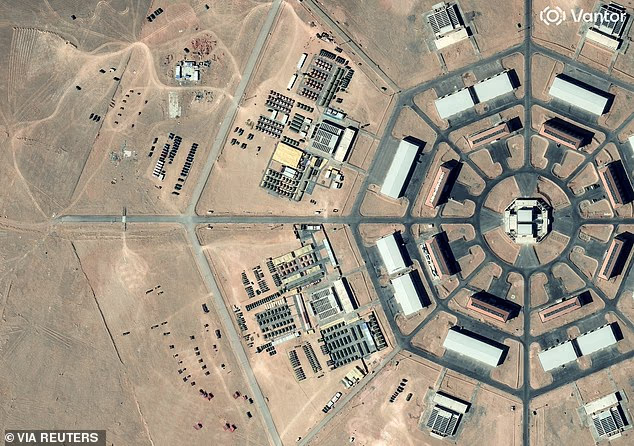
China has built a network of several launch pads near its nuclear missile silos as it ensures no American first strike could knock out Beijing’s ability to hit back.
Satellite images have revealed Beijing is building a sprawling web of launch pads, bunkers and communications nodes near the isolated nuclear silos that hold the Chinese military’s longest-range missiles.
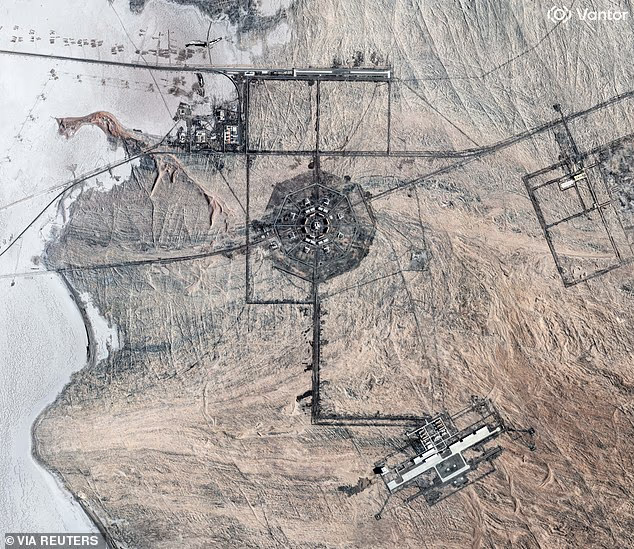
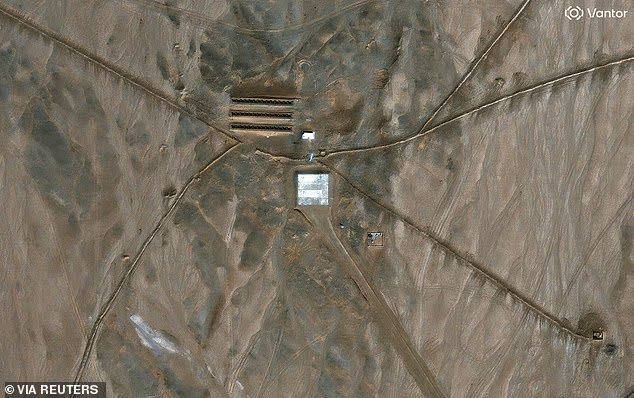
More than 80 launch pads and three octagon-shaped installations have been built in its remote northwest, near the Hami nuclear silo field.
The images also show facilities that may be used to deploy mobile air-defense missiles, electronic warfare nodes or satellite communications and command operations, according to security analysts.
The scale of the construction points to a huge expansion of infrastructure designed to protect and operate China’s land-based nuclear forces.
The network signals a significant upgrade in Beijing’s efforts to ensure second-strike capability, intensifying nuclear competition with the US as tensions rise.
‘We can see this infrastructure is being built on a grand scale, covering thousands of square kilometers of desert beyond the silo fields,’ said Alexander Neill, an adjunct fellow at Hawaii’s Pacific Forum think tank.
Depending on the precise capabilities, he said, ‘we’re looking at a very considerable enhancement and diversification of China’s strategic nuclear deterrent.’
The new desert infrastructure is centered on octagon-shaped installations built over the past six years in eastern Xinjiang. The structures contain housing for personnel and large military vehicles.
US officials and arms-control analysts say China is expanding and improving its nuclear weapons capabilities faster than any other nation.
China’s nuclear build-up is among the most scrutinised facets of President Xi Jinping’s military modernisation.
Some foreign diplomats describe Beijing’s lack of transparency and failed efforts by the US to engage the Chinese leadership on its evolving nuclear capabilities and intentions.
A cornerstone of China’s doctrine is its ‘no first use’ policy, meaning its forces wouldn’t initiate a nuclear exchange.
But some senior Western diplomats and analysts say China would possibly resort to nuclear coercion to limit outside involvement in a conflict over Taiwan.
Xi this month warned US President Donald Trump that mishandling of their countries’ disagreements over Taiwan, which China claims as its territory, could lead them to a ‘dangerous place.’ Taiwan’s government rejects China’s sovereignty claim.
Exercises involving large military vehicles occurred around the northern octagon this month and during April, the images show.
Also shown in recent images are large tents and what two analysts said appear to be camouflaged launch sites cut into the desert, some with air-defense missile batteries.
